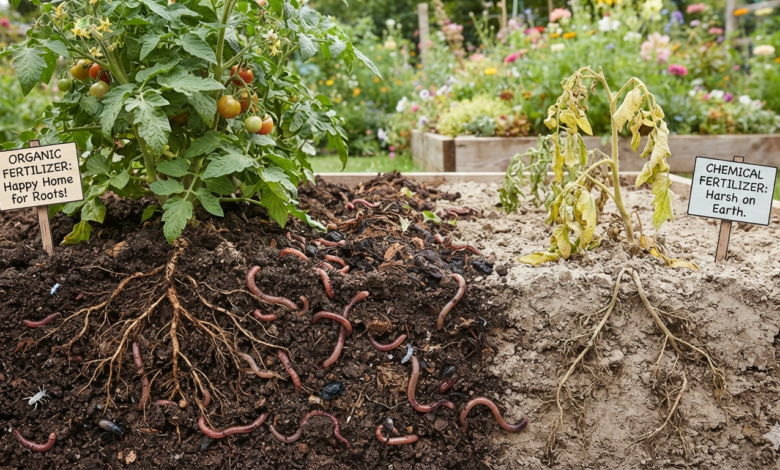
Have you ever wondered why some gardens look bright and full of life while others look tired? The secret usually hides right under the dirt. Plants need food to grow big and strong, just like we do. When you use organic fertilizer, you are giving your soil a natural meal packed with good nutrients. Unlike chemical plant food that can sometimes shock the earth, natural options work slowly and safely. They team up with tiny bugs and worms in the soil to create a happy home for your roots.
As someone who loves digging in the dirt, I have seen firsthand how much happier plants look after a dose of natural compost. It brings dead soil back to life and helps flowers pop with rich color. If you want a thriving garden without harsh bottles of chemicals, you are in the right place. Let us explore how organic fertilizer can transform your yard into a green paradise.
What is Natural Plant Food?
When people talk about organic fertilizer, they mean plant food made straight from nature. It comes from things that once lived, like plant scraps, animal manure, or ground-up minerals. Unlike man-made chemical plant foods, these natural choices do not have heavy laboratory mixes. Instead, they give your garden a slow, steady snack that lasts a long time.
Think of it like eating a healthy bowl of oatmeal instead of eating a sugary candy bar. The oatmeal gives you steady energy all morning long. In the same way, organic fertilizer feeds your garden at a gentle pace. Your plants take what they need, exactly when they need it, without getting overwhelmed.
The Power of Compost and Manure
One of the best ways to feed your garden is by using good old-fashioned compost and manure. When you pile up old vegetable peels, dry leaves, and grass clippings, they break down into dark, crumbly earth. This black gold is a top-tier organic fertilizer that home gardeners love.
Farm manure also plays a huge role in keeping soil rich. Cow, horse, and chicken wastes are packed with nitrogen, which helps leaves grow green and strong. Just make sure the manure is aged before you put it near your tender vegetables! Mixing this rich material into your garden bed adds life back into tired dirt.
Essential Nutrients for Healthy Plants
Plants are hungry creatures that need a balanced diet to survive. Every good organic fertilizer provides three main helpers: nitrogen, phosphorus, and potassium. Nitrogen helps grow big, green leaves. Phosphorus builds strong roots and helps flowers bloom bright. Potassium keeps the whole plant healthy and strong against bad weather.
When you use natural amendments like bone meal or blood meal, you target specific plant needs. Bone meal is a wonderful organic fertilizer loaded with phosphorus for your root veggies. Blood meal gives a fast kick of nitrogen to leafy greens. Balancing these natural ingredients keeps your garden thriving all season long.
Feeding Soil Microbes for Long-Term Success
Healthy dirt is actually a bustling city full of tiny living creatures. Billions of beneficial bacteria and fungi live right beneath your shoes. A good organic fertilizer does not just feed the plant; it feeds these tiny underground workers too.
When your soil microbes eat well, they break down nutrients into tiny bites that plant roots can easily drink up. Chemical plant foods can sometimes harm these helpful bugs. Sticking to natural methods protects your underground helpers. A living, breathing soil web means your garden stays healthy year after year without extra work.
Easy Ways to Make Your Own Compost at Home
You do not have to spend a lot of money to feed your yard. Making your own compost pile is a fun and free way to create top-notch organic fertilizer right in your backyard. All you need is a mix of “green” waste and “brown” waste.
Green waste includes fresh vegetable scraps, fruit peels, and green grass clippings. Brown waste includes dry leaves, small twigs, and shredded paper. Toss them together in a sunny corner, keep the pile damp like a wrung-out sponge, and turn it every week. Soon, you will have dark, sweet-smelling dirt that your plants will crave.
Choosing the Right Natural Product for Your Garden
Walking down the garden center aisle can feel a bit confusing with so many bags on the shelves. When shopping for a commercial organic fertilizer, always check the back label for the ingredients list. Look for trusted items like feather meal, kelp meal, or fish emulsion.
Fish emulsion is a liquid organic fertilizer that works wonders for giving plants a quick drink of nutrients. Kelp meal brings ocean minerals that help plants fight off stress from heat or drought. Pick the option that matches what your specific flowers or vegetables need most.
How to Apply Natural Fertilizer Safely
Even though natural plant foods are safe and gentle, you still want to use them the right way. Sprinkling a dry organic fertilizer around the base of your plants works best when you gently scratch it into the top inch of soil.
After you add the food, give the area a good soaking with water. Water helps wash the nutrients down to where the roots are waiting. Always follow the instructions on the bag so you do not overfeed your garden. A little bit of care goes a long way toward growing giant, happy plants.
Common Mistakes to Avoid When Feeding Plants
Even experienced gardeners make mistakes now and then. One common error is using too much fresh manure, which can burn plant roots because it is too strong. Another mistake is forgetting to water your garden after putting down a granular organic fertilizer.
Without water, the nutrients sit on top and cannot reach the roots below. Also, remember that natural plant foods break down slower in cold weather. Save your heavy feeding sessions for the warm spring and summer months when your plants are actively waking up and growing.
Quick Comparison: Natural vs. Chemical Plant Food
| Feature | Natural Plant Food | Chemical Plant Food |
| Nutrient Speed | Slow and steady release | Fast, instant burst |
| Soil Health | Feeds tiny soil bugs and worms | Can harm soil life over time |
| Risk of Burn | Very low risk | High risk if overused |
| Long-Term Impact | Builds rich, lasting soil structure | Leaves soil dependent on quick fixes |
Frequently Asked Questions
What is the main benefit of using a natural plant food?
It feeds your soil and plants slowly while building a healthy living ecosystem underground.
Can I use kitchen scraps directly in my garden?
It is usually better to compost them first so pests do not get attracted to your fresh vegetable beds.
How often should I feed my flowers?
Most outdoor plants love a good feeding once a month during their active spring and summer growing season.
Will natural plant food smell bad?
Some liquid fish or manure products have a strong scent at first, but the smell goes away quickly after watering.
Is natural plant food safe for pets and kids?
Yes, trusted natural formulas are generally much safer around curious pets and playing children than harsh chemicals.
Can I use too much natural fertilizer?
Yes, even though it is natural, putting down too much can still overwhelm your plants and upset the soil balance.
Conclusion:
Feeding your yard does not have to be tricky or filled with scary chemical names. By choosing a quality organic fertilizer, you are working hand in hand with nature to build a gorgeous, resilient landscape. Your plants will reward you with vibrant colors, sweet-smelling blooms, and a bountiful harvest. Grab a bag of compost or start your own backyard pile this weekend and watch your garden come alive!